
AARP Home » AARP Blog » Recent Post »Articles by: Sally Abrahms
Caregiving

Sally Abrahms

Biography: I’m a long-time contributor to AARP with both a personal and professional interest in caregiving. For the last twelve years, I have cared for my father, then my mother and now my 93-year-old mother-in-law. I cover aging and boomers and have written for TIME, Newsweek, the New York Times, USA Today and the Huffington Post, among others.

Subscribe to this topic via: RSS

Sally Abrahms 'sPosts

Putting a New Face on Alzheimer’s

Posted on 05/15/2013 by | Caregiving | Comments

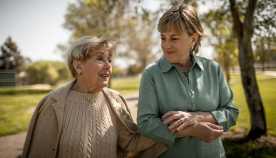
Caregiving | Home & Family | RelationshipsWhen Cathy Greenblat was in her 20s, her grandmother and grandfather had Alzheimer’s. “I bought society’s message that nothing could be done but keep them safe,” she says. Years later, when Greenblat’s mother developed the disease, she realized that lots more could be done. The former Rutgers University sociology professor began to see Alzheimer’s through a different lens — her camera — when her mother was in a memory care facility. Greenblat saw quality care in a place brimming with …

A Grave Matter: What Happens to Your Social Media When You Die?

Posted on 05/6/2013 by | Caregiving | Comments

Caregiving | RelationshipsJust when you thought you had all the important documents you need to know your loved one’s wishes — power of attorney, will, health care directive, perhaps Do Not Resuscitate (DNR) — here’s another to consider: a social media will. This digital estate planning document states what you want to have happen to your social media — Facebook, Twitter, Google, LinkedIn, email account — when you die. Just as you need an executor of your estate, you’d have to appoint a …

Power to the People via Family Caregiving Coalitions

Posted on 05/1/2013 by | Caregiving | Comments

CaregivingWhen I learned about the concept of family caregiving coalitions, what sprung to mind was the Carole King song “You’ve Got a Friend.” I say that in a good way! The famous lyrics are: “When you’re down and troubled and you need some love and care . . .” America’s 65.7 million family caregivers may be an army, but if you’re one of those troops, you can feel alone in the trenches. There’s the ever-changing situation, unpredictability, loss, exhaustion and, …

A Deep Connection: the Internet, Family Caregivers and Recipients

Posted on 04/24/2013 by | Caregiving | Comments

Caregiving | Home & Family | Personal Health | RelationshipsHigh-speed Internet can be key to living independently (also known as “aging in place“). You can go online or get smartphone apps that help you monitor chronic diseases, work from home to care for a loved one or prevent or delay functional decline with game systems that help you stay physically active. And, don’t forget the ability to be socially connected through email, online forums and message boards. And yet, a recent report issued by the AARP Public Policy Institute shows that …

An Evacuation Plan at Your Parent’s Nursing Home: 9 Questions to Ask

Posted on 04/19/2013 by | Caregiving | Comments

Caregiving | TravelMedia images of nursing home residents being evacuated after an explosion this week at a nearby fertility plant in West, Texas, raise an important issue. That is, if your loved one is, or may some day be, in a nursing home, do you know what its evacuation and emergency plans are? According to the Centers for Medicare & Medicaid Services (CMS), in 2012 on any day, more than 1.4 million Americans live in 15,800 nursing homes; more than 3 million have …

5 Things Caregivers Must Know About Diabetes

Posted on 04/17/2013 by | Caregiving | Comments

Caregiving | Home & Family | Personal HealthWith a U.S. diabetic population of 26.9% age 65+, or 10.9 million, caregivers must be careful observers. If your parent or spouse has diabetes and is over age 65, read on. Their condition is unique to their age, but it’s not always treated that way. “Geriatric diabetes is not as well understood as it is for the pediatric population. Treating a 40-year-old the same way as an 80-year-old is inappropriate,” says Dr. Medha Munshi, a geriatrician and endocrinologist who runs …